

The following steps in implementing the CSC will depend on the nature of the institution that is initiating the process, as well as the objectives and scope of that particular CSC process. As such, it is important that any user adapts these steps to suit their own specific objectives and situation.
Stage 1: Organising the community gathering
Step 1: Introduce the community/service user Score Card
As the first step of the CSC process, hold a community meeting to explain your purpose and the CSC methodology.
Step 2: Divide into groups
Divide the community into interest groups for participatory focus group discussions (FGDs), such as: women, men, youth, children, community leaders, PLWH/A (People Living With HIV/AIDS), health center committee, etc.
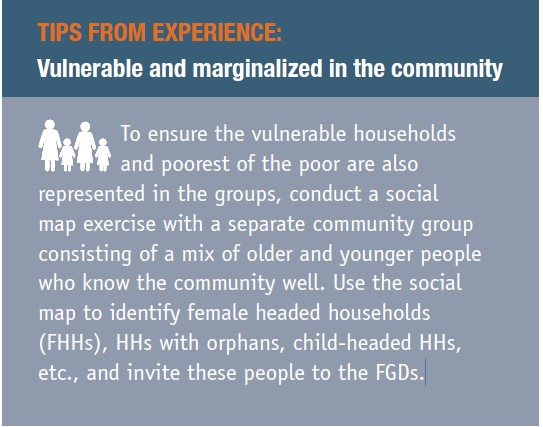
Among the groups, it will be important to choose a group of 4 to 6 people to draw a social map of the community and/or service coverage area to ensure all households are represented.
Step 3: Assign facilitators per group
Assign a two-person team of facilitators for each group and let the groups meet in separate areas (at least one of the facilitators will have a relationship of trust with the community). One facilitator leads the exercise and the other should provide support and take notes of all discussions in a notebook.
Stage 2: Developing an Input Tracking Matrix
Step 1: Track inputs
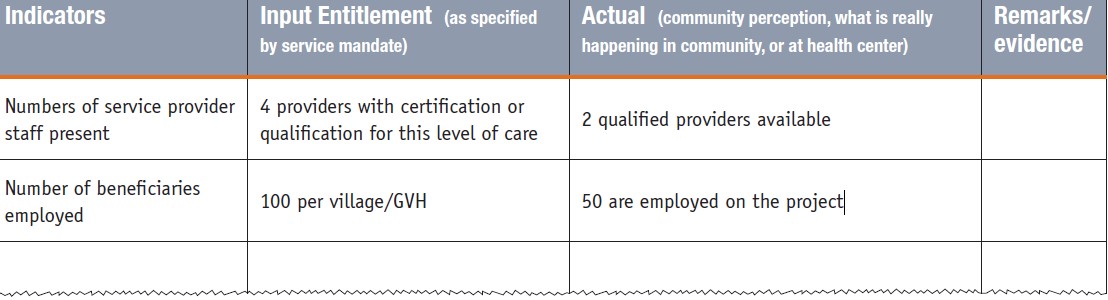
Inputs are the resources allocated to a service delivery point in order to ensure the efficient delivery of that particular service. Explain to the groups about the purpose of tracking inputs to the services. Inputs of a health center may include the number of staff who should be employed at the center, numbers of equipment, types of services offered, number of houses for staff, etc. Provide information on input entitlements of a particular service before discussion and reaching agreements on input indicators. Use matrix below to capture discussion results.