

Step 7: Close the day
After scoring has been done, reconvene as a big community group and thank the community once again for their time and ideas. Select 2 or 3 representatives from each group that were active and can represent their groups’ views to meet on an agreed day and time in order to consolidate the scores for the village or area. Remember to balance genders among these representatives.
Inform the people that after the community collectively analyses their scores for the services, the service providers will also be rating the services. There will then be a joint meeting at the service center where the users and providers will present and discuss their results together. The name of this joint meeting is the “interface meeting.” The facilitators should inform the community of the date and time for the meeting, because this will already have been planned and appointments booked with the service providers.
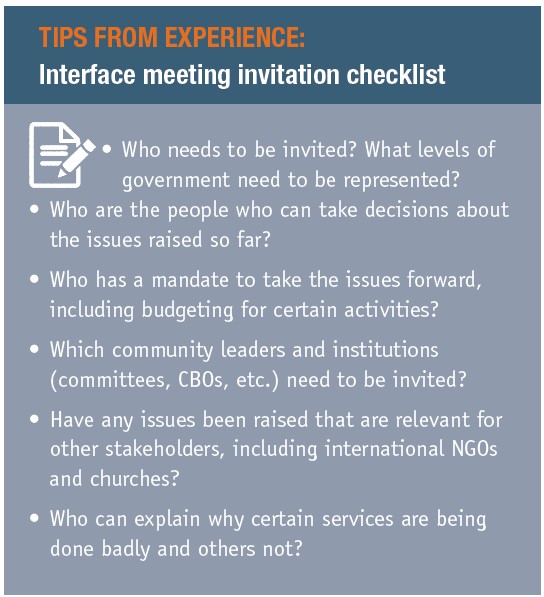
Facilitators and community leaders should confirm the invitations to local chiefs, politicians and any other stakeholders the groups feel should be present. If any of these people have not yet been invited, the process should start now.
NOTE: The score consolidation day should not be too long after the scoring day to avoid loss of information from discussions, but it should also allow time for the community to go about their normal businesses of life. (Negotiations of such nature allow the community to feel part of the process and shows that the facilitators respect the communities daily schedules as well.) However, the consolidation day should be negotiated and allocated in such a way that it does not interfere with the upcoming interface meeting which is usually booked in advance to allow service providers to plan for it.
Step 8: Consolidate the Community Score Card
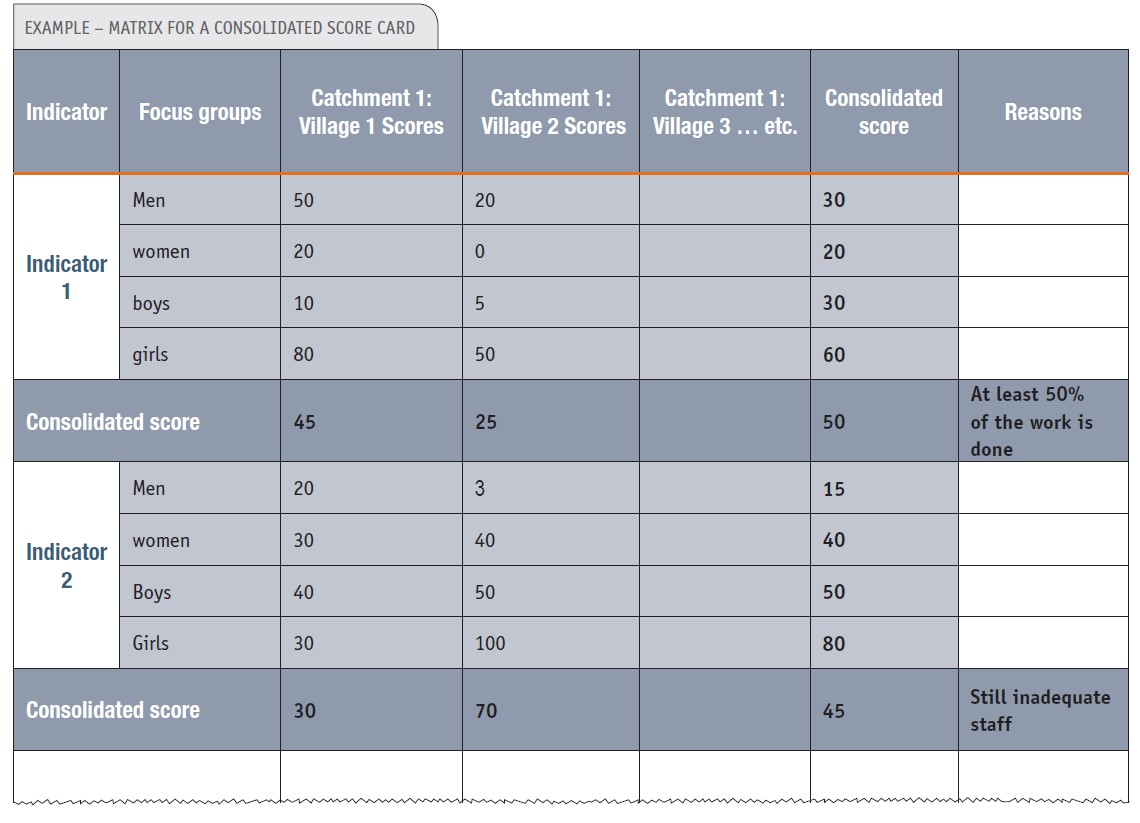
8.1 At the office, develop a matrix that will record scores from all the focus groups so that the scores can be consolidated (to have a combined score for each indicator). This consolidated matrix will present a general consensus for the indicators from one catchment area. (See example below.)
8.2 On the appointed date, facilitators will meet with the representatives from the focus groups. At the meeting, the representatives share scores from each of their groups, and the scores are inserted in the matrix. The facilitators guide the discussions by asking questions such as; “Looking at the different scores, what is the real picture? Which score can represent all scores and the real situation?” to come up with representative scores. Key point – The representatives should speak on behalf of their own groups.
8.3 When the big group has agreed on a consolidated score for that indicator, fill it into the matrix (see below). Facilitators should challenge the groups to be clear about their reasons for the scores and to write these reasons down on the matrix.
8.4 Be on the look-out for indicators with very different scores in one village to the next and find out from the representatives why that is the case. The final consolidated score can be a different score after probing and agreeing on the realistic situation OR it can be an average score agreed upon to represent all concerns, if the scores are varying and each of the groups seem to be convinced of their scores and are backing them up with valid reasons.
Step 9: Preparation of the joint ('interface') meeting
At the end of the consolidation exercise, once again remind the representatives about the purpose of the CSC tool and about the interface meeting – confirming the dates, venue and participation for the meeting.
Nominate two representatives, gender balanced, who will present the consolidated scores for the catchment area to the service providers during the interface meeting. These representatives should be literate and active in the community. Both the nominated representatives and the facilitators should keep copies of the consolidated scores; the representatives will use them to prepare for their presentation and facilitators will have them in case the representatives lose them.
Facilitators and community representatives should follow up on invitations to ensure good attendance. At a minimum, the people at the interface meeting should include:
• Local chiefs
• Community people who were involved in the process
• Community development committees concerned with the scored service
• Service provider staff and district officials responsible for delivering the service
• Local politicians (if possible)
• Local NGOs and CBOs concerned with the service
• As many community people as can be mobilised.


